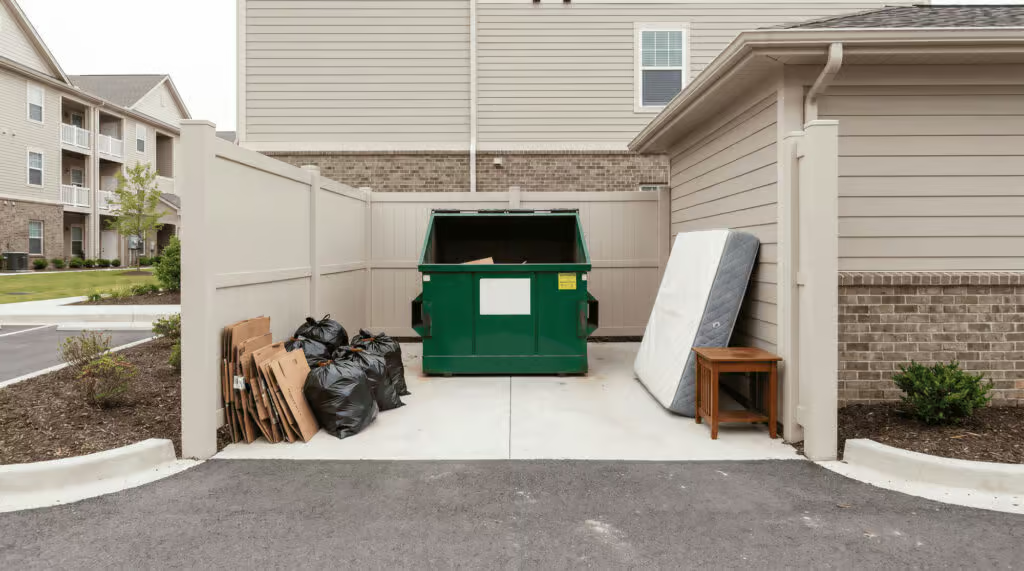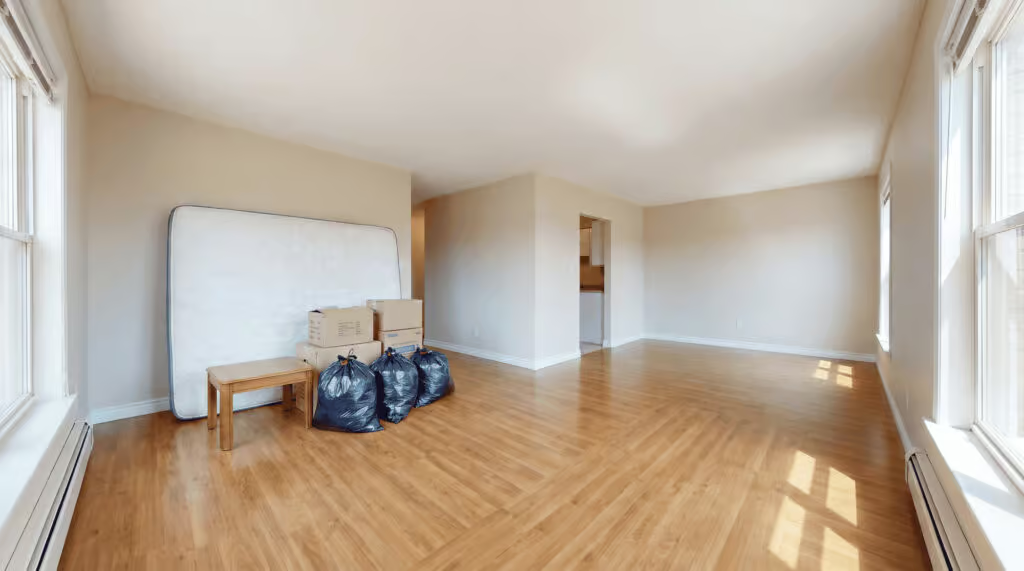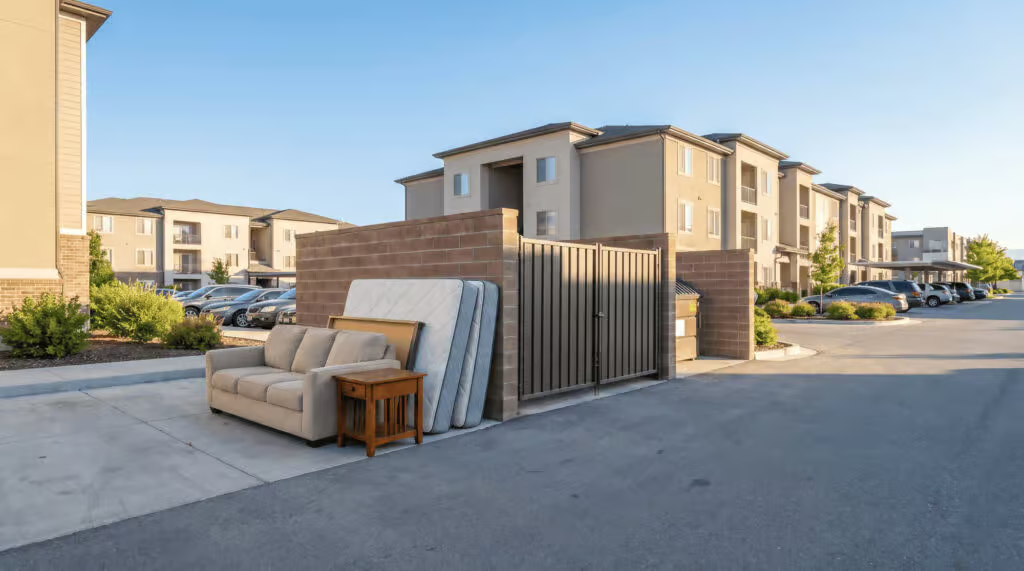
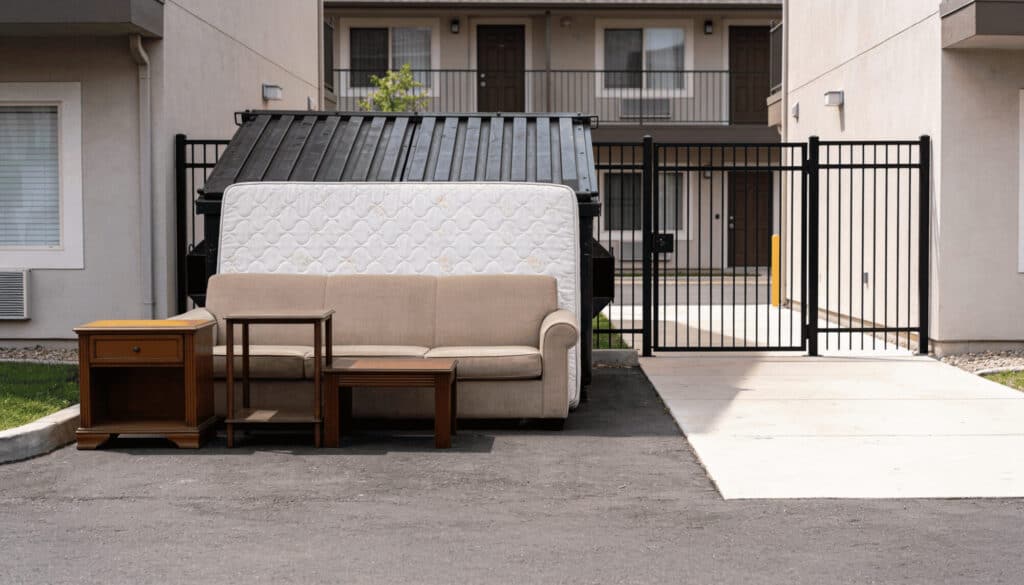
Bulk items are one of the most predictable problems at apartment communities, but they are also one of the easiest to underestimate. One mattress appears near the dumpster. Then a couch shows up after a move-out. Then cardboard, broken shelving, a dining table, and a few bagged items get added to the pile because residents assume the area has become the place for anything that does not fit in the dumpster.
For property managers, bulk item pickup is not just about hauling away large items. It is about protecting curb appeal, keeping dumpster areas usable, reducing resident complaints, preventing maintenance from becoming a hauling crew, and keeping the property from looking unmanaged during high-turnover periods.
This guide is built for apartment communities, HOAs, and multifamily property managers in Salt Lake City and across the Wasatch Front. The goal is to help you create a cleaner, more predictable process for mattresses, couches, furniture, appliances, and other large items before they become a recurring property headache.
Quick note: Bulk item rules can vary by city, hauler, property type, and management agreement. Use this as an operational guide, then confirm your specific waste, recycling, disposal, and resident policies with your hauler, city, county, ownership group, or compliance team.
What Counts as a Bulk Item at an Apartment Community?
A bulk item is usually anything too large, heavy, awkward, or restricted for normal dumpster disposal. At apartment communities, that often includes mattresses, box springs, couches, recliners, tables, chairs, bed frames, shelving, rugs, dressers, entertainment centers, exercise equipment, appliances, and large cardboard or packaging left after move-ins.
The problem is not only the size of the item. It is where the item ends up. A mattress leaning against a dumpster can block access. A couch left in a breezeway can create a safety issue. A pile of furniture near a garage can invite more dumping. Even one large item can change resident behavior if it sits long enough.
That is why bulk item pickup should be treated as part of property operations, not just an occasional cleanup task.
Why Bulk Items Become a Recurring Problem
Most residents are not trying to create a mess. They are trying to get rid of something they cannot move, cannot fit in their car, or do not know how to dispose of correctly. If the property does not give them a clear process, the dumpster area becomes the default answer.
Bulk item problems often spike around move-out weekends, lease-end cycles, student housing turnover, holiday furniture upgrades, online shopping deliveries, spring cleaning, and summer moving season. In Utah apartment communities, these periods can stack up quickly, especially when multiple units turn in the same week.
Once residents see one large item left near the dumpster, others may assume the property allows it. That is when a single couch becomes a pile, and a pile becomes a maintenance problem.
Step 1: Decide Where Bulk Items Should Go
The first step is deciding whether residents are allowed to place bulk items anywhere on site. If the answer is yes, the location should be controlled. If the answer is no, the alternative process needs to be clear.
Some properties use a designated staging area during move-out periods. Others require residents to schedule pickup through the leasing office. Some only allow bulk items during specific windows. Others do not allow bulk items on site at all unless management has approved the pickup in advance.
There is no single perfect system for every property. A 40-unit community with limited parking needs a different process than a 300-unit property with multiple dumpster enclosures. The important part is choosing a process and making it visible.
Step 2: Separate Bulk Items From Regular Dumpster Use
Bulk items should not be treated the same as regular trash. Mattresses, couches, appliances, and large furniture can block dumpster access, prevent the hauler from servicing the container, and make residents more likely to leave normal trash outside the bin.
If bulk items are allowed near the dumpster enclosure, they should be staged in a way that does not block the gate, container, fire lane, sidewalk, parking stall, or hauler access. If there is not enough room to stage them safely, the property needs a different plan.
For many apartment communities, the better approach is to keep bulk items out of the dumpster area entirely and coordinate pickup through management or a vendor.
Step 3: Create Clear Resident Instructions
Residents need a simple answer to one question: “What do I do with this large item?” If the answer is not obvious, they will guess. Most of the time, that guess ends with the item sitting next to the dumpster.
Your instructions should explain what counts as a bulk item, where residents should not place those items, whether they need to schedule with the office, whether fees apply, how much notice is required, and what happens if items are dumped without approval.
Keep the language direct. For example: “Do not leave mattresses, couches, tables, appliances, or furniture by the dumpster. Contact the leasing office before placing any large item outside your unit.”
Step 4: Plan Around Move-Out and Move-In Spikes
Bulk items are predictable during turnover periods. Residents moving out may leave behind mattresses, broken furniture, unwanted tables, shelving, rugs, and boxes. New residents may create extra cardboard and packaging from furniture deliveries.
Rather than waiting for the dumpster area to overflow, plan ahead for high-volume weeks. Send resident reminders before move-out dates, schedule extra checks around lease-end weekends, and decide whether a bulk pickup window should be arranged in advance.
For properties near universities, downtown Salt Lake City, or high-turnover rental areas, this can make a major difference. The goal is to prevent the pile from forming in the first place.
Step 5: Document Repeat Dumping Patterns
If bulk items keep appearing in the same place, document the pattern. Take photos, note dates and times, track item types, and identify whether the problem happens after weekends, move-outs, holidays, or missed pickups.
Documentation helps you decide whether the issue is resident communication, outside dumping, container access, lack of signage, insufficient pickup frequency, or a need for recurring removal support. It also gives regional managers and owners a clearer picture of what is happening on site.
Before-and-after photos are especially useful when a vendor handles the cleanup. They show the condition before removal and confirm that the area was reset afterward.
Step 6: Decide Between On-Call and Recurring Pickup
Some communities only need bulk item pickup after occasional move-outs. Others need recurring support because furniture, mattresses, and dumped items appear every week.
On-call pickup works well when the problem is occasional and easy to identify. Recurring pickup works better when the property regularly deals with move-outs, illegal dumping, student turnover, large resident volume, or repeated dumpster area issues.
The right approach depends on how often the problem occurs, how visible it is, how much time maintenance spends on it, and whether it affects resident satisfaction or leasing tours. If the same bulk items keep appearing every week, the property probably needs a system, not another emergency cleanup.
Step 7: Protect Maintenance From Becoming the Hauling Crew
Maintenance teams are already responsible for work orders, inspections, make-ready tasks, repairs, safety issues, vendor coordination, and resident needs. When they also become responsible for mattresses, couches, and dump runs, the rest of the property can fall behind.
There are times when maintenance can handle a small item quickly. But repeated furniture removal, stairs, heavy mattresses, large appliances, and multiple dump runs can pull them away from higher-value work. It can also create safety risks if the team does not have the right equipment or enough people.
A bulk item pickup partner should make the maintenance team’s job easier by removing the heavy, awkward, and time-consuming items before they slow down the rest of the property.
Bulk Item Pickup Checklist for Apartment Communities
- Define what counts as a bulk item at your property.
- Decide whether residents can stage bulk items on site.
- Choose a staging area that does not block dumpsters, gates, sidewalks, parking, or hauler access.
- Create simple resident instructions for mattresses, couches, furniture, appliances, and large cardboard.
- Send reminders before move-out weekends and high-turnover periods.
- Document repeat dumping with photos, dates, item types, and locations.
- Review whether the issue is resident behavior, outside dumping, missed pickup, or lack of bulk item planning.
- Decide whether on-call or recurring pickup makes more sense.
- Save before-and-after photos with the work order.
- Keep maintenance focused on property repairs and rent-ready work when removal volume gets too high.
Common Mistakes Property Managers Should Avoid
The first mistake is assuming residents know what to do with large items. Most residents only know that the item needs to leave their apartment. If the property does not provide a clear process, the dumpster area becomes the default.
The second mistake is letting bulk items sit too long. A visible pile signals that the area is unmanaged, and it can attract more dumping. Once the pile grows, it becomes harder and more expensive to reset.
The third mistake is treating every cleanup as a one-time issue. If the same problem happens every week, the property needs to adjust the system. That could mean better signage, resident reminders, access control, recurring pickup, or a different staging process during move-out periods.
When to Bring in Junk Run Bros
Bring in a junk removal partner when bulk items are visible to residents or prospects, when mattresses and couches are blocking dumpster access, when maintenance does not have time for dump runs, when multiple units are turning at once, or when the same problem keeps recurring.
Junk Run Bros helps property managers across Salt Lake City and the Wasatch Front with apartment bulk item pickup, dumpster area cleanup, trash-outs, and recurring property cleanout support. We remove the items that slow down your team and help reset the property before the mess becomes the new normal.
If your apartment community keeps dealing with mattresses, couches, furniture, and abandoned items around the dumpster, the issue may not be the cleanup itself. It may be the lack of a repeatable bulk item process.
Bulk Item Pickup FAQ
What items usually count as bulk items at apartment communities?
Common bulk items include mattresses, box springs, couches, tables, chairs, dressers, shelving, rugs, appliances, exercise equipment, and large cardboard or packaging that does not fit normal disposal areas.
Should residents leave bulk items by the dumpster?
Only if your property has approved that process and the items are staged in a way that does not block access. Many apartment communities need residents to schedule bulk item disposal through the office instead.
How often should an apartment community schedule bulk item pickup?
It depends on property size, turnover, resident behavior, and how often items appear. Some communities only need on-call pickup, while others benefit from recurring checks during move-out seasons or high-volume periods.
Can Junk Run Bros remove mattresses, couches, and furniture from apartment properties?
Yes. Junk Run Bros removes mattresses, couches, furniture, bulk items, and abandoned property items for apartment communities and property managers across Salt Lake City and the Wasatch Front.
Can bulk item pickup be combined with dumpster area cleanup?
Yes. If the same area has furniture, mattresses, loose trash, cardboard, or items blocking the dumpster enclosure, the pickup can be scoped as both bulk item removal and dumpster area cleanup.